


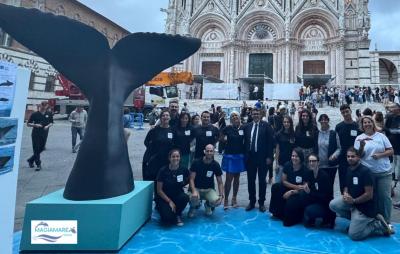
"Fishing and aquaculture are not just resources: they are cultures, landscapes, and ancient knowledge that today face new challenges. Our research guides them toward a sustainable future."
The sea is a living resource, powerful and fragile at the same time. It is a source of food, culture, and work, but also an ecosystem to be protected. It is within this delicate balance that the Magiamare Siena research group (https://magiamaresiena.unisi.it/) operates, committed for over ten years to developing concrete solutions that combine the productivity of fishing and aquaculture with the protection of marine and coastal ecosystems.
With an integrated and multidisciplinary approach, the group studies, experiments with, and proposes sustainable and innovative strategies, actively engaging with fishermen, businesses, managing bodies, and coastal communities. Their activities range from developing eco-friendly technologies to biodiversity conservation, from managing alien species to valorizing waste, and also include citizen science and environmental communication.

At the core of their work is the search for solutions that make fishing more selective and less impactful. The group studies and tests acoustic (https://lifedelfi.eu/) and light deterrents (https://magiamaresiena.unisi.it/dissuasori/), as well as circular hooks and other low-impact gear at sea to reduce the accidental capture of protected species like cetaceans, turtles, and seabirds. The activities also include assessing the status of fish resources and analyzing stock dynamics to support more informed and adaptive management.
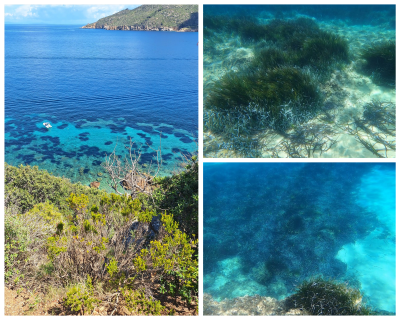
Some marine habitats, such as Posidonia oceanica seagrass meadows, perform essential ecological functions and are currently under severe threat. The group designs and evaluates active conservation interventions, such as artificial barriers and restocking areas, which are capable of countering destructive practices (like illegal bottom trawling) and promoting the recovery of vulnerable environments.
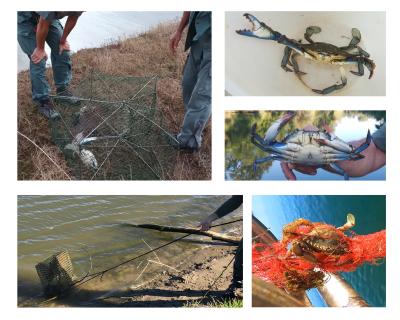
The arrival of exotic species is one of the great challenges for marine ecosystems. The group monitors the spread of invasive organisms, particularly the blue crab (Callinectes sapidus), mapping its distribution and experimenting with selective capture tools to promote eco-friendly management that limits impacts on biodiversity and traditional activities (https://magiamaresiena.unisi.it/ricerca/i-nostri-progetti/).
In collaboration with companies in the sector, Magiamare promotes forward-looking forms of aquaculture: integrated multi-trophic aquaculture (IMTA) systems that combine fish, mollusks, and macroalgae; recirculating aquaculture systems (RAS) for water and energy savings; and innovative and sustainable feeds. Special attention is given to reducing bycatch in aquaculture, developing environmental monitoring plans, and integrating circular bioeconomy practices.

In line with the principles of the circular economy, the group works on valorizing biological and non-biological waste from fishing and aquaculture. Discarded nets, organic residues, and unused by-products are transformed into new resources through innovative recovery and reuse systems, reducing environmental impact and creating new opportunities for the sector (https://interreg-marittimo.eu/web/p.ri.s.ma.-med2).
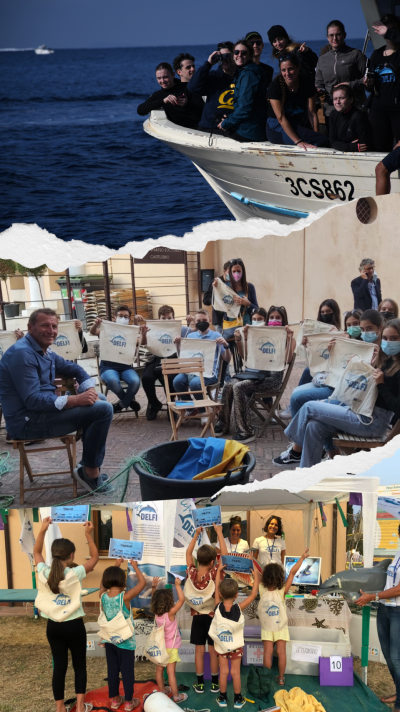
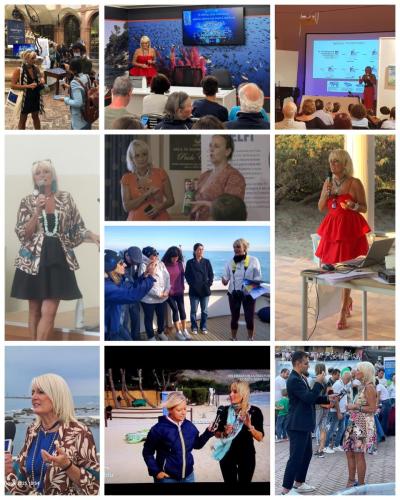
Science is not complete unless it engages in dialogue with society. The group is actively involved in designing citizen science initiatives that engage fishermen, students, and citizens in data collection, marine biodiversity conservation, and building a new collective awareness of the value of the sea.