


The activities of this research line, carried out by the "AgriSOS" group, focus on applying an ecotoxicological approach to assess the environmental impact of agricultural practices and the potential mitigation actions. The adopted ecotoxicological approach is based on the integrated analysis of interactions between contaminants and non-target organisms, such as pollinator insects, to understand the physiological and behavioural alterations caused by contamination and other anthropogenic pressures.
One of the primary goals of this research line is to develop innovative protocols and interpretive models to measure the ecotoxicological risk levels of natural populations in agricultural and urban environments. These models integrate different stress responses at the sub-individual level (e.g. through the analysis of cellular and biochemical biomarkers) and at the organism level (behaviour, survival). This research line aims to provide a solid scientific framework to guide agricultural policies toward more sustainable practices and to preserve ecological balance and biodiversity in rural areas.
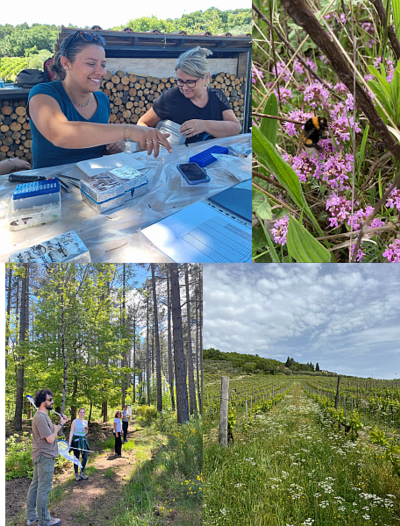
Specifically, this research line focuses on:
Evaluating the sub-lethal effects of environmental contaminants on Apis mellifera and other pollinator insects
These studies aim to evaluate the sub-lethal effects of agricultural and urban contaminants on bees and other pollinator insects through a biomarker-based approach capable of providing insights into potential alterations in various physiological pathways: neurotoxicity, detoxification and metabolic processes, oxidative stress, DNA damage, immunotoxicity, cellular stress, and energy mobilization. Laboratory studies are conducted to assess the toxicological effects of commercial pesticides and other anthropogenic contaminants, both individually and in combination. Field studies are conducted to evaluate the health status of wild and managed pollinators and to assess the effectiveness of agricultural mitigation measures to support pollinators, in line with EU biodiversity protection policies.
Investigating the toxicological effects of fungicides and other pesticides on non-target soil organisms
These studies aim to evaluate the potential toxic effects of various fungicides used in agriculture on non-target soil species (e.g. Eisenia fetida).

Investigating the ecotoxicological status of avian species from environments with different anthropogenic impacts
These studies aim to conduct ecotoxicological monitoring of bird species by applying a multi-biomarker and multi-level approach (from biochemical/cellular to population level).
The goal is to investigate the influence of environmental changes and multi-stressors on the physiological status of avian species.
Assessing the presence of chemical contaminants and biotoxins in short supply chain products.
Evaluating the potential toxicological risk related to the disposal of olive oil production by-products (vegetation water and pomace) on soil and freshwater organisms.
The ultimate goal is to bioremediate and reuse these by-products in agroecosystems.
The research group is also active in studying the effects of both old and new-generation pollutants on protected species, such as marine turtles and in developing integrated models to study the health status and ecosystem services of riverine ecosystems.